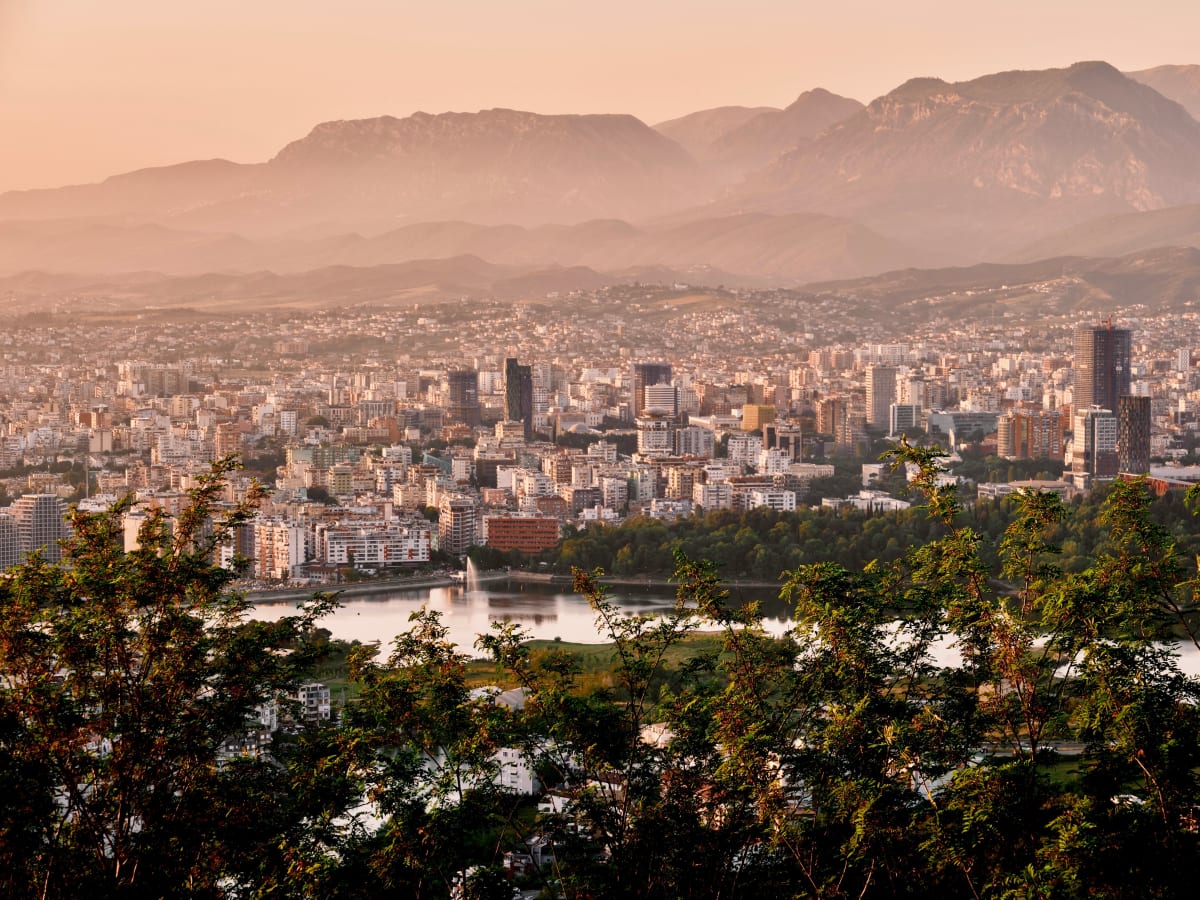
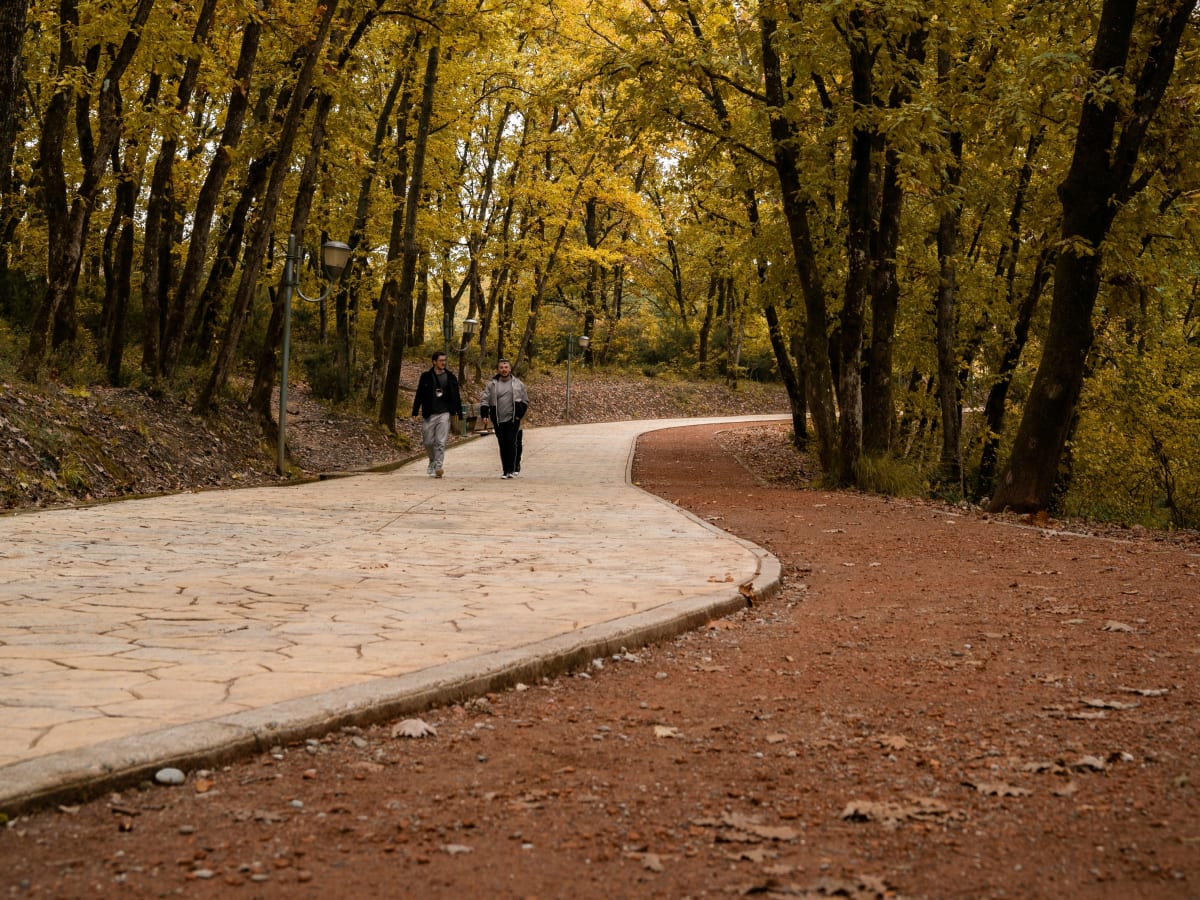
Tirana se trouve à peu près au centre d'un petit pays, et c'est le fait le plus utile à retenir. L'Albanie fait à peu près la taille de la Bretagne, la capitale est proche de son milieu, et presque tout ce qu'un visiteur veut voir la première fois est à moins de deux heures de route. On peut garder le même appartement une semaine, voir une ville classée à l'UNESCO, un amphithéâtre romain, un musée dans un château et une montagne, et dormir chaque soir dans le même lit.
C'est réellement inhabituel. Dans la plupart des capitales européennes, les bonnes excursions sont à trois heures aller et trois heures retour, et la journée y passe. Ici la contrainte n'est pas la distance mais l'état des routes et la façon dont la circulation sort de la ville, si bien que les durées ci-dessous sont plus longues que celles annoncées par une application de navigation.
Sortir de la ville
Les furgons et les bus sont le moyen par lequel les Albanais circulent entre les villes, et ils coûtent peu. Un furgon est un minibus qui part quand il est plein plutôt qu'à une heure publiée : parfait le matin à l'aller, beaucoup moins l'après-midi au retour. Les liaisons longue distance partent surtout du terminal des bus Sud et Nord, et les autocars internationaux du terminal international de Tirana. Vérifiez l'horaire de retour avant de partir vous promener, car les fréquences se réduisent nettement après le milieu de l'après-midi et hors saison.
Une voiture de location vous achète le départ matinal, et c'est lui qui rend possibles deux étapes dans une journée au lieu d'une. C'est aussi le seul moyen d'atteindre des endroits que les bus ne desservent pas. Lisez la section plus bas avant de réserver : les contrats de location albanais comportent une exclusion précise qui surprend beaucoup de monde. Nos locations de voitures couvrent les comptoirs de l'aéroport et les agences en ville.
Un chauffeur ou une excursion organisée vous enlève le problème du stationnement, bien réel à Berat et à Kruja, et la question de savoir qui conduit au retour. Les organisateurs d'excursions et les guides privés font les circuits classiques, en général avec prise en charge à l'hôtel.
Les taxis conviennent aux trajets courts, Durrës et Kruja en particulier, à condition de convenir du tarif et du temps d'attente avant de partir. Nos taxis sont les compagnies locales, pas les stations devant les hôtels.
Berat, celle à faire si vous n'en faites qu'une
Berat est à environ 120 kilomètres au sud et demande un peu plus de deux heures par trajet. La ville est inscrite au patrimoine mondial de l'UNESCO depuis 2008, et elle le mérite.
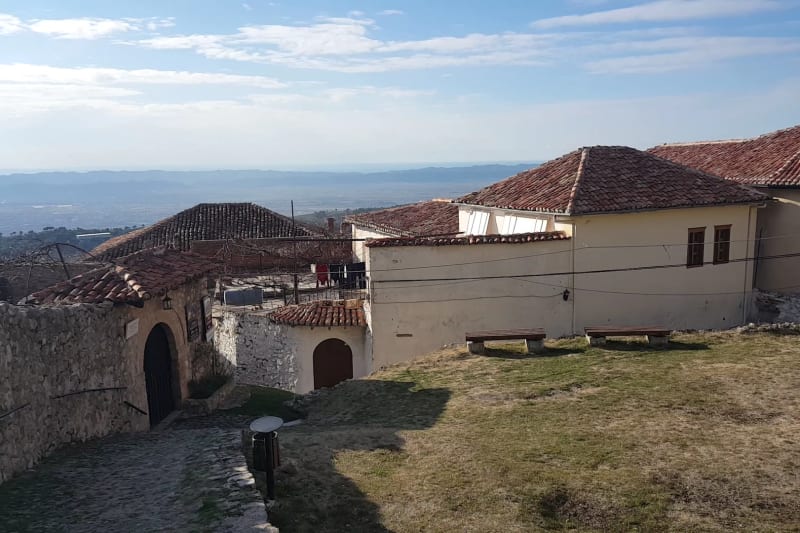
On l'appelle la ville aux mille fenêtres, et le nom décrit exactement ce que l'on voit depuis la rivière : deux versants de maisons ottomanes blanches empilées en terrasses, chacune avec ses rangées de fenêtres tournées vers l'eau et vers la colline d'en face. Mangalem, le quartier historiquement musulman, est sous le château sur la rive nord. Gorica, historiquement chrétienne, lui fait face de l'autre côté de l'Osum. Une passerelle les relie, et la traverser reste les dix meilleures minutes de la ville.
Le château est la partie que l'on sous-estime. Ce n'est pas une ruine que l'on regarde avant de repartir : des familles vivent toujours à l'intérieur des murs, on monte donc à travers un quartier habité, entre les fils à linge et les potagers, avec des églises au milieu. Le musée Onufri qui s'y trouve conserve les icônes du peintre du seizième siècle dont il porte le nom, et son rouge particulier est ce que l'on cherche du regard une fois qu'on vous l'a montré.
Comptez une journée entière. En partant de Tirana à huit heures, on y est à dix heures et demie : le château avant le déjeuner, les deux quartiers ensuite, et le retour avant la nuit.
Kruja, la plus proche et la plus dense
Kruja est à 35 kilomètres au nord, soit environ quarante-cinq minutes, moins en partant tôt. C'est l'excursion la plus simple depuis Tirana et celle qui fonctionne le mieux en demi-journée.
La ville est bâtie sur une terrasse de montagne au-dessus de la plaine, et la montée des derniers lacets fait partie du plaisir. Kruja était la place forte de Skanderbeg, qui repoussa d'ici les armées ottomanes au milieu du quinzième siècle, et le musée aménagé dans le château en 1982 lui est consacré. À côté, le musée ethnographique occupe une véritable maison du dix-huitième siècle, et c'est le meilleur des deux s'il faut choisir, parce qu'il montre comment une maisonnée fonctionnait vraiment au lieu de raconter une histoire nationale.
Le bazar restauré est une ruelle pavée de boutiques à façade de bois qui vendent tapis, cuivre et objets anciens. Il s'adresse ouvertement aux visiteurs et vaut tout de même la promenade, parce que le bâti est authentique et que la rue a la forme qu'elle a toujours eue. Les prix se négocient, et ils partent haut.
Kruja est à vingt minutes de l'aéroport, elle fonctionne donc aussi comme sortie du dernier matin avant un vol de l'après-midi.
Durrës, la romaine et la balnéaire
Durrës est à 35 kilomètres à l'ouest, environ quarante minutes, et ce sont deux journées différentes selon ce que vous venez chercher.
L'amphithéâtre romain est la raison d'y aller. Construit au deuxième siècle de notre ère et redécouvert seulement en 1966, quand un habitant l'a vu s'effondrer dans son jardin, c'est le plus grand des Balkans et il se trouve au milieu de la ville moderne plutôt qu'en périphérie. Une petite chapelle byzantine à mosaïques murales est insérée dans la structure, le genre de superposition que l'on trouve dans un lieu habité sans interruption depuis qu'il était la colonie grecque d'Épidamne, au septième siècle avant notre ère.
L'autre Durrës est la bande de plages qui descend vers Golem, et il est honnête de dire que ce n'est pas la plus belle côte d'Albanie. C'est la plus proche, c'est là que Tirana va en août, et c'est construit d'un bout à l'autre. Si vous voulez une vraie journée de plage et que vous avez une voiture, la côte plus au sud vaut l'heure supplémentaire. Si vous voulez un après-midi facile dans l'eau après une matinée d'archéologie romaine, Durrës fait très bien l'affaire.
Shkodra, pour le nord et le lac
Shkodra est à 95 kilomètres au nord, environ une heure quarante-cinq par la route neuve. C'est la capitale culturelle du nord et elle ne ressemble pas à Tirana : plus basse, plus ancienne, plus italienne dans sa vie de rue, et pleine de vélos.
Le château de Rozafa, sur son éperon au-dessus du confluent de trois rivières, est la pièce maîtresse, et la vue depuis les remparts sur le lac de Shkodra vers le Monténégro explique la géographie de toute la région d'un seul coup d'œil. En ville, le musée national de la photographie Marubi conserve les archives d'une dynastie de photographes qui ont documenté l'Albanie depuis les années 1850, et c'est l'un des meilleurs petits musées du pays. La rue Kole Idromeno est le théâtre de la promenade du soir.
Shkodra est aussi la porte du grand nord, ce qui nous amène au seul conseil pratique de ce guide qui compte plus que les autres.
Visites et excursions à Tirana
Visites à pied, tours gastronomiques, excursions à la journée et billets coupe-file à Tirana et dans tout le pays, via GetYourGuide.
Château de Kruja et lac d'Ulez à la journée
Le château et le bazar ottoman de la petite ville de colline le matin, puis une sortie en bateau sur le lac d'Ulez l'après-midi.
Vérifier les disponibilités
Lac de Bovilla, mont Gamti et Kruja
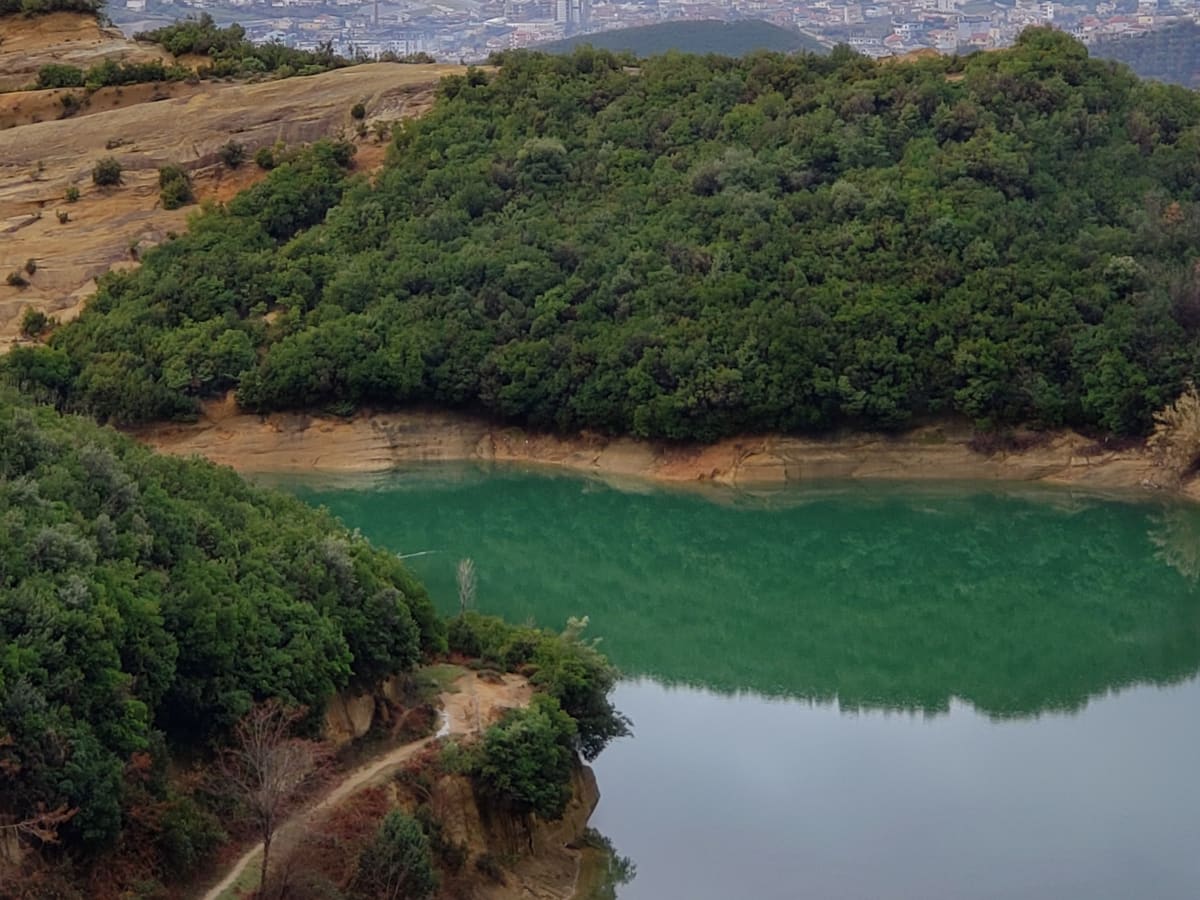
Une montée à pied du mont Gamti pour la vue sur le réservoir turquoise, associée au vieux bazar de Kruja au retour.
Vérifier les disponibilités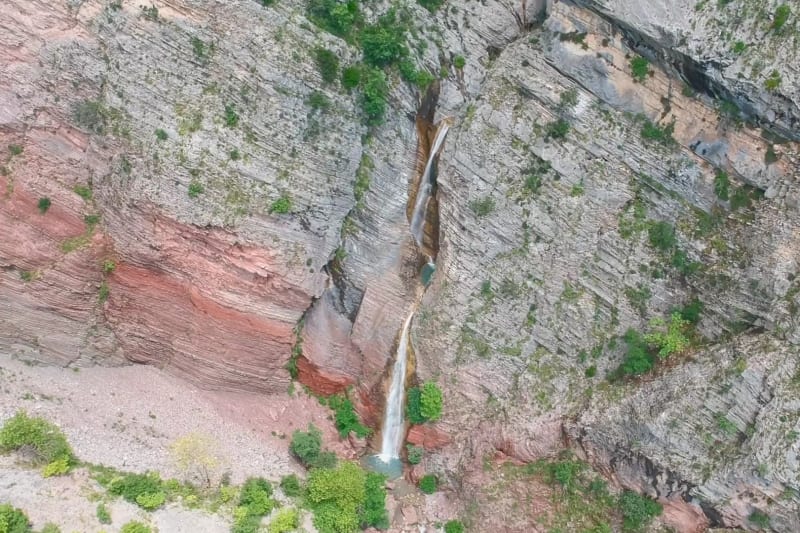
Téléphérique du Dajti et cascade de Shengjergj
Le téléphérique jusqu'au sommet, associé à une marche vers la cascade dans la gorge derrière, déjeuner compris.
Vérifier les disponibilitésLes routes interdites à une voiture de location
Les endroits les plus photographiés d'Albanie sont dans les montagnes du nord : Theth, Valbona, le ferry du lac de Koman. Ils sont spectaculaires et, pour beaucoup, ils sont la raison du voyage.
Ce sont aussi les endroits que votre contrat de location interdit presque certainement. Les conditions albanaises n'autorisent les voitures de location que sur les routes publiques revêtues, et l'assurance standard exclut les roues, le soubassement, le pare-brise et l'habitacle, c'est-à-dire précisément les quatre choses qu'une route de montagne non revêtue abîme. Une voiture montée à Theth et rendue avec un carter fendu n'est pas un sinistre, c'est une facture, et l'exclusion est la norme du marché, pas le caprice d'un loueur.
Rien de tout cela ne veut dire que vous ne pouvez pas y aller. Cela veut dire y aller par un moyen prévu pour : un transfert organisé, un chauffeur agréé avec un véhicule adapté à la route, ou le ferry de Koman avec un chauffeur à chaque extrémité. Demandez directement à l'opérateur si le véhicule et l'assurance couvrent l'itinéraire. Tout organisateur d'excursions qui fait le nord le fait chaque semaine et vous le dira clairement.
Pour tout le reste de ce guide, les routes sont revêtues et une voiture de location convient parfaitement.
Le mont Dajti, la demi-journée sans préparation
Le Dajti n'est pas vraiment une excursion à la journée, c'est pourquoi il vient en dernier et pourquoi il est facile. La montagne s'élève directement au-dessus de la bordure est de la ville, et le téléphérique la gravit en une quinzaine de minutes depuis une station accessible en vingt minutes de taxi.
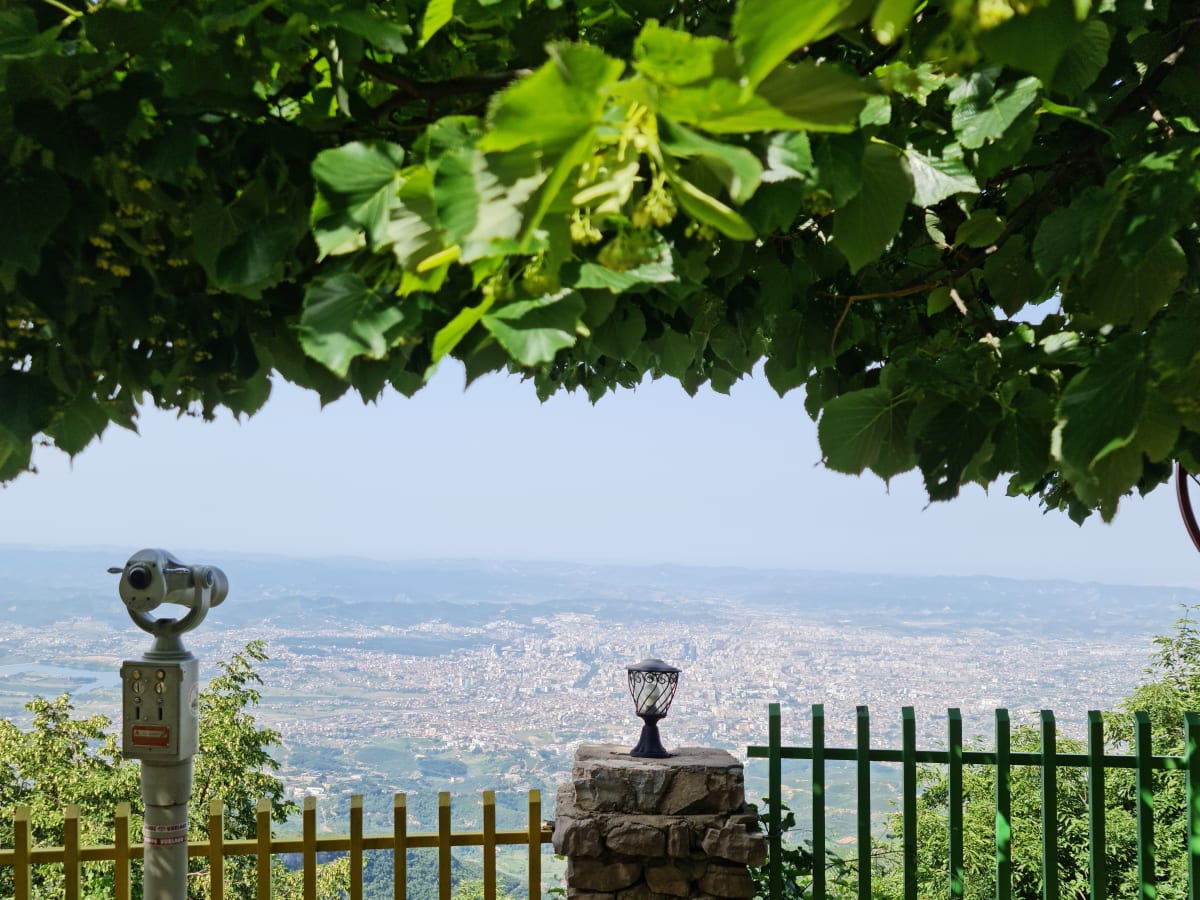
En haut il y a une terrasse panoramique, deux ou trois restaurants et une longue vue vers l'ouest sur toute la plaine de Tirana, jusqu'à la mer par temps clair. Des sentiers courent le long de la crête pour qui veut davantage que le panorama. Il y fait sensiblement plus frais qu'en ville, ce qui en juillet n'est pas un détail.
Montez en fin d'après-midi, restez pour le coucher du soleil et redescendez dîner au Blloku. Cela coûte deux heures et c'est ce que cette page propose de mieux pour l'effort consenti. Plus de détails sur la montagne et la station sur la page du mont Dajti.
Notes pratiques
L'Albanie utilise le lek. À Tirana la carte passe presque partout, sur un étal de bazar ou dans un restaurant de village beaucoup moins, alors emportez des espèces pour une journée à l'extérieur. Nos bureaux de change couvrent les agences en ville, dont les taux sont meilleurs que ceux de l'aéroport.
La chaleur de l'intérieur est réelle : Berat en août est nettement plus chaude que Tirana, et la montée au château se fait en plein soleil. Le printemps et l'automne sont les meilleures saisons pour tout ce qui figure sur cette liste.
Enfin, prévoyez plus de temps que ce qu'annonce la carte, dans les deux sens. Sortir de la ville entre sept et neuf heures, ou rentrer entre seize et dix-neuf heures, allonge sérieusement n'importe quel trajet, et la route vers Durrës est la pire de toutes.